Electrical Training Program tuition and payment periods →
Approved by the California Department of Industrial Relations (DIR). Students obtain an Electrical Trainee Card and accumulate hours toward California licensure. Not approved in other states.
Program Objectives
This program will provide an overview of electrical occupations, including the training and employment options available electrical industry. The electrician school program will allow students the opportunity to learn in a variety of settings in electrical trades.
What You'll Learn
The curriculum covers the core knowledge and practical skills employers look for in entry-level candidates.
- Electrical safety and OSHA-10 standards
- National Electrical Code (NEC) fundamentals
- Electrical theory: Ohm's Law, circuits, and power calculations
- Residential wiring methods and devices
- Commercial and industrial wiring systems
- Conduit bending, installation, and support
- Motor controls and low-voltage systems
- Reading electrical prints and blueprints
- Grounding, bonding, and overcurrent protection
- CPR certification preparation
Understanding the Certificate
A certificate from this program is not a license to perform electrical work independently.
California requires electricians to hold a state contractor's license or work under a licensed contractor. Once enrolled, students are eligible to obtain their Electrical Trainee (ET) Card through the California Department of Industrial Relations (DIR) — there is no need to wait until completion. The ET Card allows you to accumulate on-the-job hours toward journeyman status under a licensed employer. InterCoast does not guarantee employment, licensure, or any specific outcome.
We've been very impressed with the candidates that we've employed!
Hear From a Graduate
Entry-Level Roles
Graduates of this program may pursue entry-level positions with titles such as:
- Electrical Helper
- Electrical Trainee
- Apprentice
No specific employment outcome is guaranteed. Labor market conditions vary.
Admissions & Financial Aid
A high school diploma or GED is required for enrollment. Students who do not hold a diploma or GED may qualify under the Ability-to-Benefit (ATB) alternative — speak with an admissions advisor to determine eligibility.
This program is eligible for Title IV federal financial aid. Financial aid is available to those who qualify — not all students will qualify for all types of aid. Contact the financial aid office for a complete picture of your options.
Where This Program Is Offered
On-ground training at 5 California campuses:
School Performance Fact Sheets
The Bureau for Private Postsecondary Education (BPPE) requires a School Performance Fact Sheet for this program at each location where it is offered, with completion, placement, licensure-exam and salary data. Review it before you enroll.
- Fairfield — Electrical Training Program Performance Fact Sheet (PDF)
- Granada Hills — Electrical Training Program Performance Fact Sheet (PDF)
- Rancho Cordova — Electrical Training Program Performance Fact Sheet (PDF)
- Riverside — Electrical Training Program Performance Fact Sheet (PDF)
- West Covina — Electrical Training Program Performance Fact Sheet (PDF)
All School Performance Fact Sheets and required disclosures →
Frequently Asked Questions
What do I earn from InterCoast's Electrical Training Program?
A Certificate of Completion. Once enrolled, you are also eligible to obtain your California Electrical Trainee (ET) Card through the DIR — the first step toward accumulating hours for journeyman eligibility.
Is this program available outside California?
No. The Electrical Training Program is approved by the California Department of Industrial Relations and is structured around California licensure pathways. It is not approved in other states.
Is financial aid available for this program?
Yes. This program is Title IV eligible, meaning eligible students may qualify for federal financial aid. Contact the admissions office to learn what options may be available to you.
Is this program VA approved?
Yes. InterCoast's Electrical Training Program is VA approved, and InterCoast accepts veteran transfer students. The VA determines your eligibility for benefits. Veterans transferring from another school can start at intercoast.edu/military/veterans/transfer/ or by calling admissions.
How long is the Electrical Training Program?
The program is 40 weeks (approximately 10 months) and carries 49 academic credits, delivered in a hybrid format combining classroom instruction with hands-on lab work.
What is the admissions requirement?
A high school diploma or GED is required. Students who do not have a diploma or GED may be considered under the Ability-to-Benefit (ATB) alternative — ask an admissions advisor for details.
Do I need prior experience for the Electrical Training Program?
No prior electrical experience is required. The program is introductory: it provides related training in the electrical trade, with coursework in safety, the Electrical Code, equipment and knowledge of the trade. The core electrical courses list no prerequisites.
What does the Electrical Training Program cover?
Instruction covers the fundamentals of electricity and power distribution, basic trade mathematics, National Electrical Code requirements, and commercial, industrial and residential wiring, along with control theory and other fundamentals. The program includes an OSHA-10 component.
How do I start working in the electrical field in California?
Once enrolled, students can obtain an Electrical Trainee (ET) Card from the California Department of Industrial Relations (DIR). With an ET Card, a student can work in the electrical field under a licensed electrical contractor and accumulate on-the-job hours toward journeyman status. This approval applies in California only. No employment outcome is guaranteed.
What is the hands-on lab work like in the Electrical program?
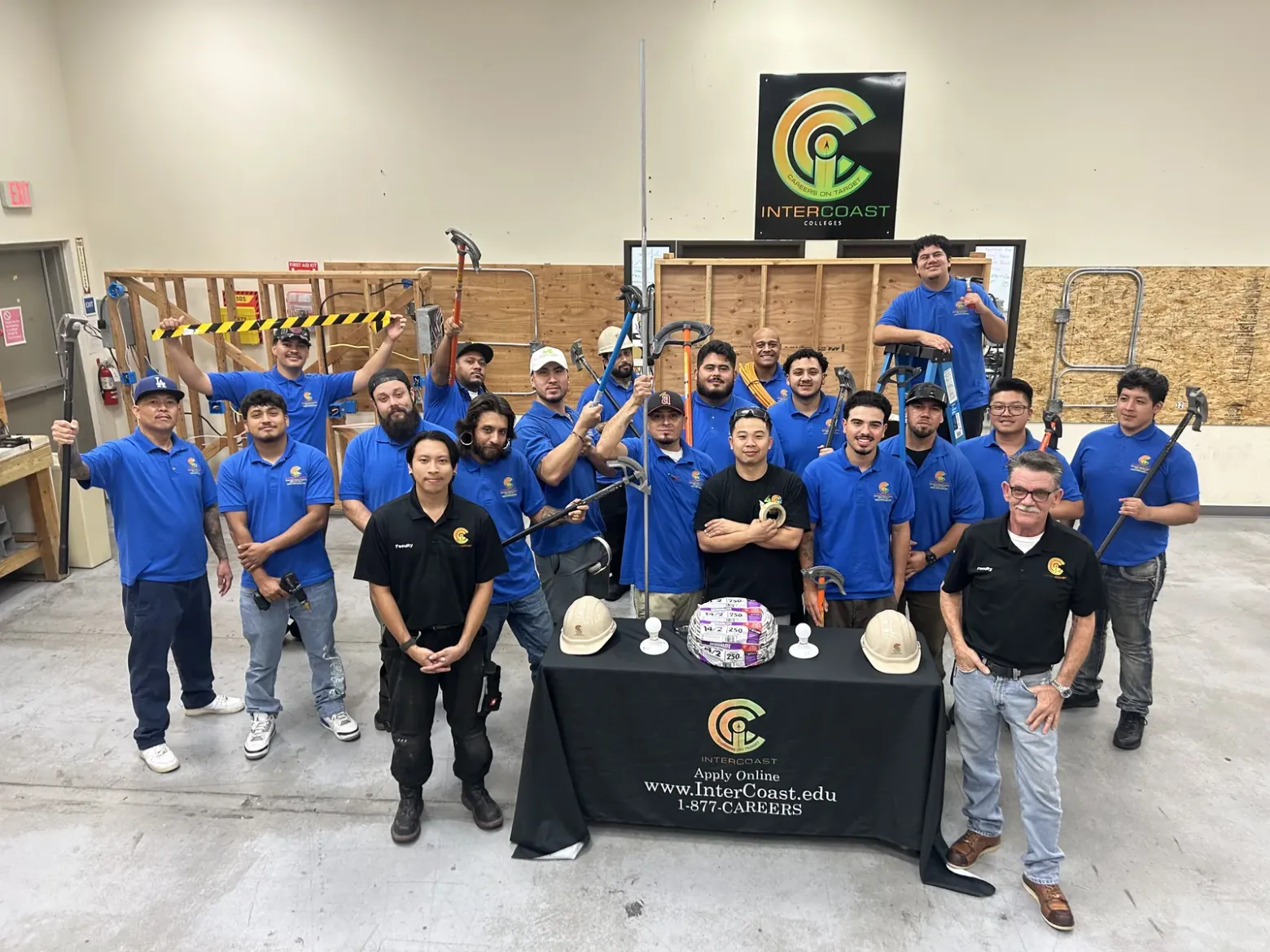
Lab work is part of the program's hybrid format and takes place on campus. The electrical labs are equipped with trade tools and equipment for demonstration and safe, hands-on practice of the skills taught in the curriculum.
What's the difference between the Electrical Training Program and an apprenticeship?
The Electrical Training Program is structured instruction in a hybrid format covering electrical theory, safety, the National Electrical Code and wiring, and it prepares students to obtain an Electrical Trainee (ET) Card from the California DIR. With an ET Card, a student can work under a licensed electrical contractor and accumulate on-the-job hours toward journeyman status. An apprenticeship is generally a paid, on-the-job training arrangement in which a worker learns the trade while employed, often with related classroom instruction.